|
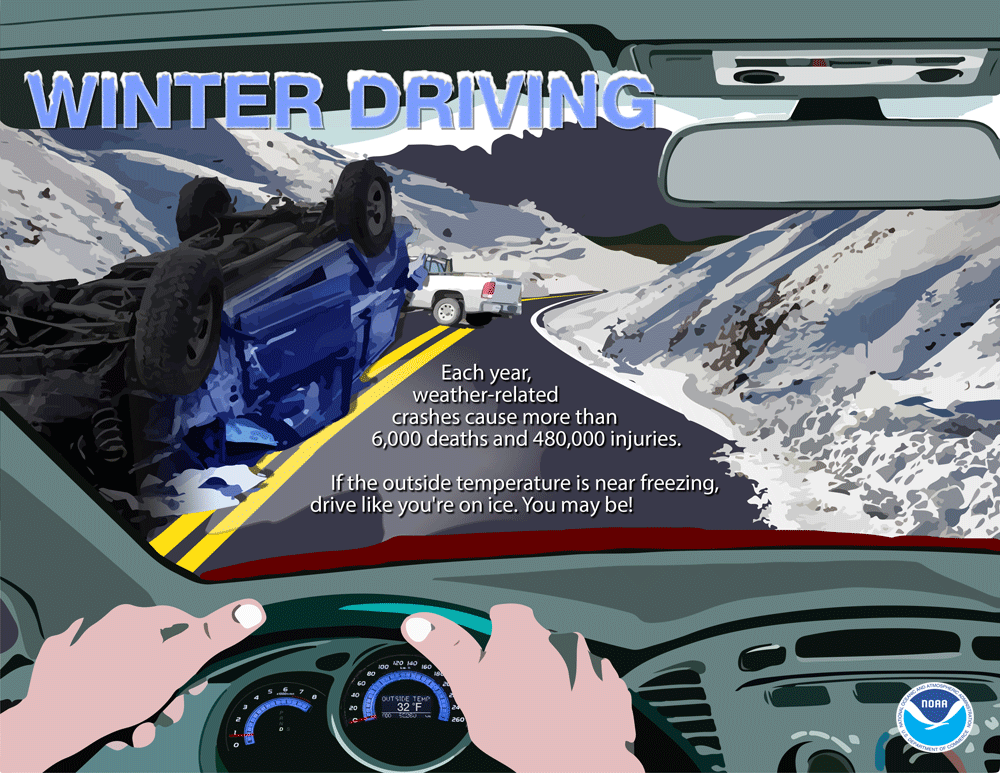
Winter weather presents hazards including slippery roads/surfaces, strong winds and environmental cold. Employers must prevent illnesses, injuries, or fatalities, by controlling these hazards in workplaces impacted by winter weather.
OSHA and National Oceanic and Atmospheric Administration (NOAA) are working together on a public education effort aimed at improving the way people prepare for and respond to severe weather. This page is designed to help businesses and their workers prepare for winter weather, and to provide information about hazards that workers may face during and after winter storms.
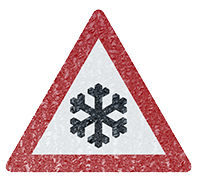
To prevent slips, trips, and falls, employers should clear snow and ice from walking surfaces, and spread deicer, as quickly as possible after a winter storm. When walking on snow or ice is unavoidable workers should be trained to:
- Wear footwear that has good traction and insulation (e.g. insulated and water resistant boots or rubber over-shoes with good rubber treads)
- Take short steps and walk at a slower pace to react quickly to changes in traction
OSHA’s Hazard Alert, Snow Removal: Know the Hazards Pamplet, and winter weather webpages provide guidance to employers on how to prevent serious injuries and fatalities. Employers should consider options to avoid working on roofs or elevated heights, plan ahead for safe snow removal and must:
- Provide required fall protection and training when working on the roof or elevated heights
- Ensure ladders are used safely (e.g. clearing snow and ice from surfaces)
- Use extreme caution when working near power lines
- Prevent harmful exposure to cold temperatures and physical exertion
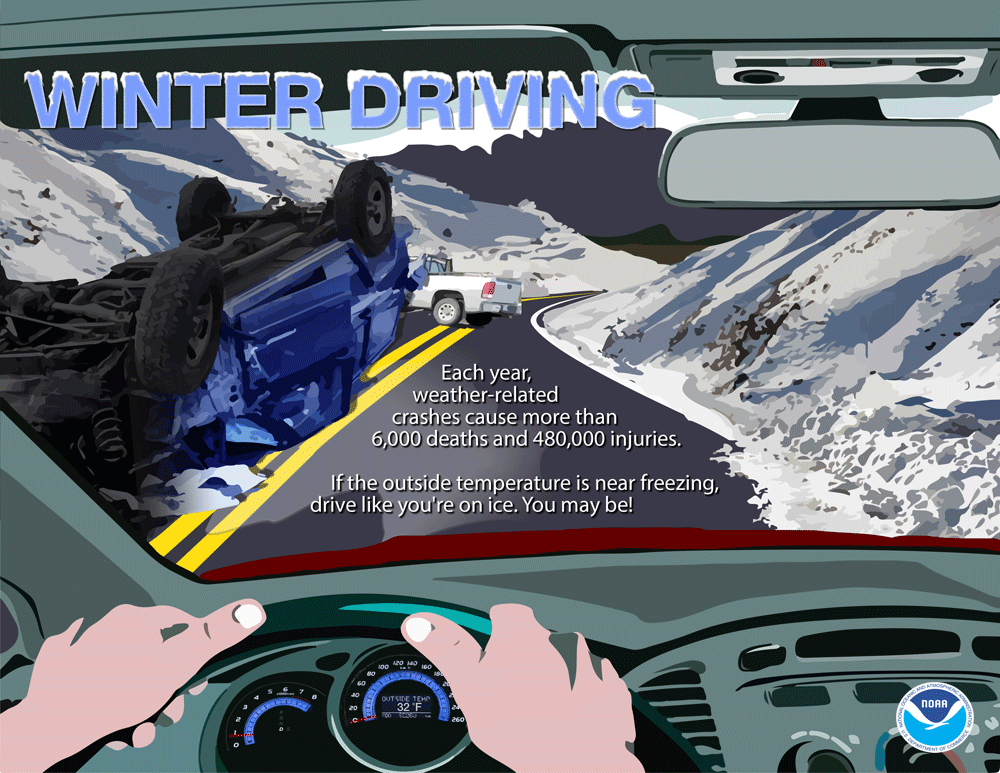
NWS/NOAA Links
National Weather Service. The National Weather Service's Daily Briefing is a website that provides information on the weather outlook.
NOAA Weather Radio. A network of radio stations that continuously broadcast weather information from the nearest National Weather Service office.J
|